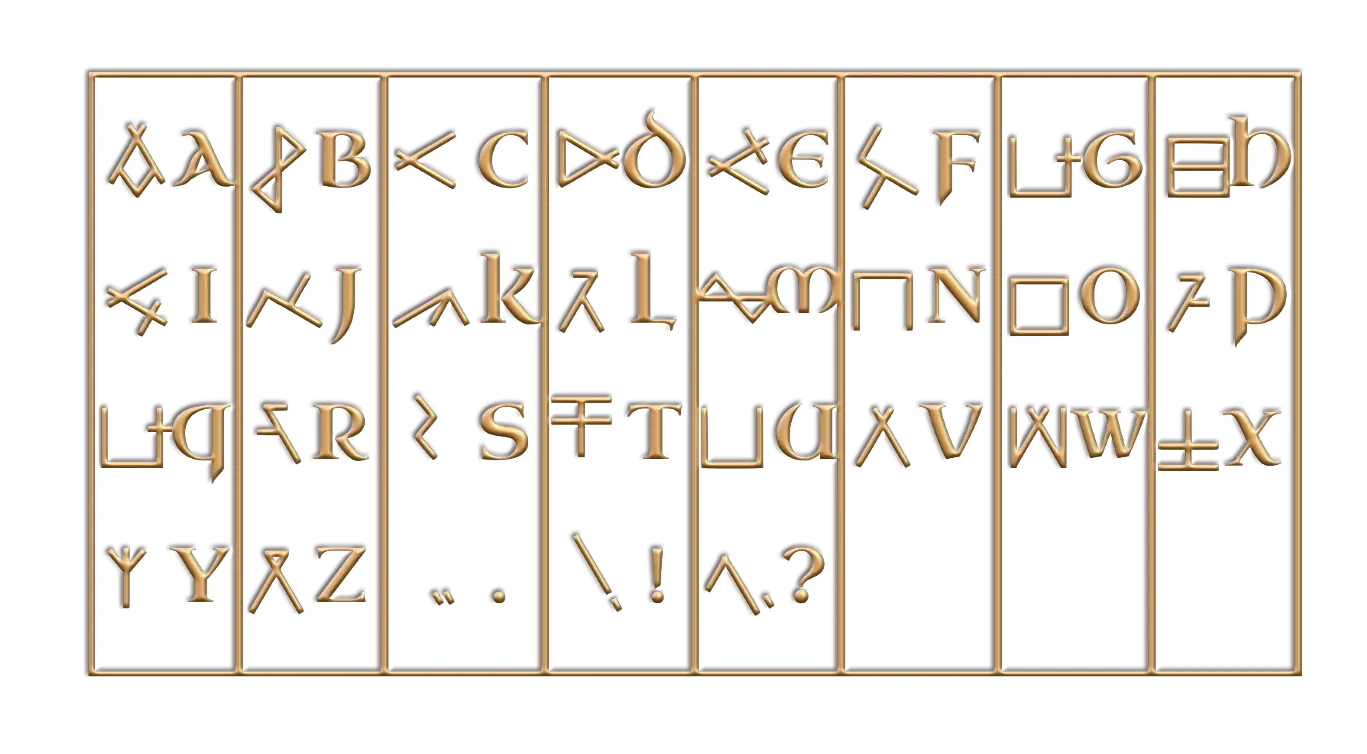
Mernic has changed and evolved greatly across the centuries, shaped by distance, conflict, and the fragmentation of the old Mernic Empire. Distinct regional forms such as Pyreez Mernic, Karthian Mernic, and Erthen Mernic each possess their own variations in pronunciation, vocabulary, cadence, and idiom—linguistic reflections of the fractured unity shared by the Mernic-speaking peoples.
Despite lending its name to the continent itself, Mernic is spoken surprisingly little in the southern reaches of Mernia. The Zaureez, Mersyffians, and Poaleez rarely use the language beyond formal, historical, or diplomatic contexts, favouring their own native tongues instead. Even so, Mernic remains the second most widely spoken language across the continent, surpassed only by the fluid and highly diplomatic language of Mernamarc.
To outsiders, Mernic is often regarded as a harsh and perplexing tongue. Its structure is thick with guttural consonants, clipped phrasing, and abrupt tonal shifts that can make it difficult to master. Yet beneath that severity lies a distinctive elegance. Sweeping vowels and carefully weighted sentence rhythms lend the language a solemn beauty that many native speakers deeply cherish. To them, Mernic sounds both powerful and mournful, carrying the weight of history in every phrase.
Structure: Subject–Verb–Object (SVO)
Sample Phrase:
Noh zuit nel zez zakurdiz noh tozzez.
The light of day sharpens the shadows.
The phrase reflects the nature of the language itself—blunt in sound, yet deeply poetic in meaning, expressing the Mernic fascination with duality, struggle, and the balance between light and darkness.
At a glance
A
Spoken by - Mernia
Origin - North-eastern Mernia
Status - In-use
Derivation - High Mernic